When Care Becomes Medically Complex- Home Should Still Feel Safe
Nurse- led complex care at home across the UK.
British Elderly Care provides complex care at home, a nurse- led specialist support service for people with complex health and care needs supported by a UK, based provider.
Our approach combines clinical oversight, person, centred planning, and clear communication to facilitate safe, professional care at home.
Complex Care at home is aimed at individuals whose health conditions are extremely complicated and who require care beyond what standard home care can offer.
However, these people do not necessarily have to stay in the hospital. In the UK, such care essentially helps people with serious, long, term, or multiple health conditions to be able to live at home.
Such patients typically require specialist oversight, skilled support, and careful coordination.
Instead of focusing only on daily living assistance, Complex Care is about safely managing at home the higher, dependency needs. This can be specialist nursing input, clinical monitoring, and support with medical equipment or complex routines.
The aim is to enable people to live in their familiar homes while at the same time their health needs being properly, professionally, and in a dignified way, managed. Complex care at home is a continuation from hospital based care, making it the next step towards everyday living.
Complex care helps people whose health care needs are layered, ongoing, and often not predictable. This includes individuals living with neurological conditions, respiratory conditions, serious injuries, or multiple long-term illnesses.
Many people supported through complex care also have what are often described as “complex needs” – where physical health challenges overlap with reduced mobility, dependency on equipment, or the need for continuous supervision.
Meeting these needs safely through just standard care is not possible. Complex care acknowledges that every individual’s condition is different and therefore, a personalized solution is needed which involves consideration of not only medical necessities but also day to day activities, personal likes and emotional health.
Care is not merely about handling diseases but really about identifying the person who has those needs and helping them in a manner that is respectful of their freedom and their standard of living.
Specialist, nurse – led oversight is at the core of Complex Care. It is through this, that care is always clinically understood, risks are identified, and there is professional accountability.
Nurses, along with trained care professionals, and if necessary, therapists or other specialists, are involved in delivering a coordinated support system that evolves with the changes in needs.
A multidisciplinary approach prevents the fragmentation of care. On the contrary, care is collaboratively planned, checked, and changed through good communication, joint working, and constant evaluation.
The system is efficient in organizing the complex health needs of the patients in a safe manner and at the same time, lessening the cases of unnecessary hospital admissions.
Complex care, by providing such a high level of support at home, gives individuals the opportunity to stay in a familiar environment and at the same time, it does not compromise on safety, structure, or professional standards.
People having multiple health issues often worry about their safety and how they can manage at home. Complex Care does not deny these truths but rather gives a framework of support to allow the person to take control of the situation responsibly. Risk is not hidden but recognized, controlled, and resolved through well thought out planning.
The main objective of Complex Care is not to command a person’s life but to help them live it as fully and comfortably as possible. Such assistance includes honoring a person’s usual way of life, supporting the person’s autonomy if it is suitable, and modifying the care as the person’s health conditions change.
By combining clinical supervision and person centred care, complex care enables people to stay in their homes and at the same time not lose their feeling of control, their dignity, or their identity.At British Elderly Care, complex care is carried out by nurse- led teams who, in close collaboration with the individuals and their families, strive to ensure that the people they support at home do so safety, dignity, and continuity in their lives.
When the health situation becomes very complicated, the family is the first one to experience emotional and practical pressures. It may become difficult to handle medical information, seeking help, and deciding things at the same time. Complex care at home is a program that not only brings clarity but also care.
Families receive support through effective communication, credible and achievable goals, as well as professional advice. Complex care does not scare or create urgency but rather it brings reassurance, openness, and mutual understanding.
By clarifying the necessities, the way care is given, and the manner in which support can change over time, families are in a position to be really dependent on the care agreement.
Such a calm, organized method can both decrease the level of doubt and at the same time raise the level of trust in the care being provided.
We provide complex care at home for patients across the UK who are able to stay at home regardless of their address location. Instead of a fixed care model, we design care plans around individual needs so the support can be flexible, responsive, and suitable for each specific case.
If not only for the time right after hospital discharge but also for the long term health management or if the condition is changing,complex care is a structured alternative to a hospital stay or relocation to an unsuitable care environment.
This type of care combines the benefits of specialist monitoring and home based care. It not only ensures that patients with high dependency needs continue to be managed well but also that they maintain continuity, familiarity, and stability in their daily life.

Understanding Complex Care in the UK
What Complex Care Means in Simple Terms
Complex care in the UK is one of the aspects that is aimed to detail the special support, which refers to specialist support for people whose health and care needs are too involved, intensive, or unpredictable to be met through standard home care alone.
Simply,complex care is doing the managing of the higher, risk health needs safely, frequently in a person’s home. There can be clinical monitoring, specialist routines, and the use of medical equipment, personal care, and daily support.
British Elderly Care offers complex care services to elderly at home who, due to their personal situations, need this kind of highly structured and professionally managed support.
The concept of complex care is deeply embedded in the UK healthcare system, being almost parallel with the guidance used by theNational Health Service.
By and large, it is an initiative to keep the patients out of hospitals (thereby reducing hospital stays) and allowing them to be in the environment that is familiar to them while still getting the level of care that their health condition demands.
Delivering a complex care at home model through structured, nurse- led services that focus on clinical oversight, clear communication, and person centred planning is how British Elderly Care approaches it.
Supporting People with Complex Health and Care Needs
Understanding What “Complex Needs” Mean in Real Life
The term “complex needs” is often used within healthcare and social care, but for individuals and families, it usually describes something very real and personal.
Complex needs are not simply defined as one diagnosis or condition. They are the circumstances of a person’s health, care, and daily living needs that are multiple, continuous, and interrelated.
Complex needs come between different conditions and their impact on a person’s ability to live safely and independently. This is why support must go beyond basic care tasks.It requires understanding the whole picture – health, routine, environment, and personal circumstances – rather than treating individual issues in isolation.
At British Elderly Care, complex care is designed to support people living with these layered needs in a structured, professional, and person-centred way.

Physical Health Needs and Long-Term Conditions
Physical health needs are often one of the several elements of complex care. Such conditions may be related to long standing illnesses that weaken the physical body or the capability of the individual to carry out daily activities without outside help.
People with complex physical needs may require:
- Ongoing support with movement and positioning
- Assistance with personal care that involves higher levels of risk
- Monitoring of physical changes or symptoms
- Support with specialist routines or equipment
Complex care services at home target physical health needs by providing the individual’s normal surroundings thus, causing less upheaval and at the same time ensuring safety.
The care plans are not only centered around the patients’ medical needs but also take into consideration how life goes on practically day by day.
When it comes to addressing physical health needs at British Elderly Care, there is a conscious decision to strike a balance between having the care worker’s close professional supervision and at the same time, showing great consideration in accepting the person’s level of comfort, individual choices as well as their desire for independence.
At the time when the care plan is made, the goal of the care is to reduce risk, support communication, and maintain dignity at every stage.
Neurological and Cognitive Needs Within Complex Care
Neurological conditions are frequently a major factor in people having complex health and care needs. Such conditions may impact a person’s ability to move, coordinate, communicate, remember, and make decisions, potentially in highly unpredictable ways.
People living with neurological needs may experience:
- Changes in mobility or muscle control
- Problems with speech or understanding
- Changes in cognition or diminished awareness
- Increased reliance on structured routines
Supporting someone with neurological needs is initially about being patient, persistent and understanding the variations of symptoms that can happen from one day to another.
The way a person is looked after has to be flexible enough, so it can change without giving the person a feeling of confusion or being distressed.
Complex care is the framework that allows the proper functioning and management of neurological needs without any risk, yet at the same time it gives the individual freedom to live at home.
British Elderly Cares strategy is that brain related illnesses extend beyond the physical aspect of health and care is not only aware of the emotional aspect and the quality of life but also clinical safety.
Nurse-Led, Multidisciplinary Support at Home
Specialist, nurse – led oversight is at the core of Complex Care. It is through this, that care is always clinically understood, risks are identified, and there is professional accountability.
Nurses, along with trained care professionals, and if necessary, therapists or other specialists, are involved in delivering a coordinated support system that evolves with the changes in needs.
A multidisciplinary approach prevents the fragmentation of care. On the contrary, care is collaboratively planned, checked, and changed through good communication, joint working, and constant evaluation.
The system is efficient in organizing the complex health needs of the patients in a safe manner and at the same time, lessening the cases of unnecessary hospital admissions.
Complex care, by providing such a high level of support at home, gives individuals the opportunity to stay in a familiar environment and at the same time, it does not compromise on safety, structure, or professional standards.
Supporting Independence While Managing Risk
People having multiple health issues often worry about their safety and how they can manage at home. Complex Care does not deny these truths but rather gives a framework of support to allow the person to take control of the situation responsibly. Risk is not hidden but recognized, controlled, and resolved through well thought out planning.
The main objective of Complex Care is not to command a person’s life but to help them live it as fully and comfortably as possible. Such assistance includes honoring a person’s usual way of life, supporting the person’s autonomy if it is suitable, and modifying the care as the person’s health conditions change.
By combining clinical supervision and person centred care, complex care enables people to stay in their homes and at the same time not lose their feeling of control, their dignity, or their identity.
At British Elderly Care, complex care is carried out by nurse- led teams who, in close collaboration with the individuals and their families, strive to ensure that the people they support at home do so safety, dignity, and continuity in their lives.
The Impact of Long-Term and Progressive Conditions
The majority of the individuals supported through complex care have a condition that is either chronic or progressive. What is implied here is that their needs may change over time, sometimes very slowly and sometimes quite suddenly.
Progressive conditions can affect:
- Physical strength and mobility
- Independence in daily activities
- Ability to manage routines without support
- Emotional wellbeing and confidence
Complex care acknowledges that support shouldn’t stay the same. It gives them continuity along with flexibility when needs evolve.
British Elderly Care assists people through this kind of journey by keeping up communication and changing care plans as per situations in the real world.
How Complex Needs Shape Care Planning
Care planning for people with complex needs differs substantially from standard care arrangements. Such planning has to consider the risk, the mutual dependence of conditions, and the necessity of specialist contribution, all the while being person centred.
Complex care planning typically considers:
- The interaction between different health conditions
- Levels of dependency and supervision required
- Daily routines and personal preferences
- Environmental factors within the home
- The role of family members and informal carers
British Elderly Care (BEC) staff coordinators and managers work together to develop care plans that show the care delivery through a clear and collaborative process.
The purpose of the guidance documents is to help everyone who is involved in care to understand the context of care and the reason for the approach.
Why Some People Need Complex Care Instead of Standard Home Care
Standard home care is basically services that’ll help a person with their day to day activities at home like bathing, dressing, meal preparation, or being a companion. Many people can live with this kind of help, but it’s not always enough when health needs get more and more demanding or medically complex.
- Ongoing medical needs
- Higher levels of dependency
- Greater risk if care is not delivered correctly
- Multiple conditions that interact with each other
In such cases, support requirements go beyond the usual help with daily living. The situation might call for clinical judgement, specialist training, or in some cases, a more frequent check up to make sure the person is safe and well.
Complex care acknowledges that most health problems are intertwined. Let’s say, for instance, the physical health of a person, his/her ability to move, the extent of mental faculties, and the individual’s feelings of happiness are all probably influencing each other.
British Elderly Care conducts complex care for those whose needs mean that care is a higher level of coordination and professional oversight, always ensuring that care is safe and personalised.


Managing Complex Health and Medical Needs at Home
One key attribute of complex care is that it helps people who have advanced or long term health issues to stay at home. Home care management doesn’t imply that standards are lowered or that risks are taken unnecessarily.
Complex care at home may involve:
- Supporting individuals who rely on specialist routines or equipment
- Monitoring health changes and responding properly
- Coordinating care across different professionals
- Ensuring that care plans remain suitable as conditions evolve
Offering this standard of care at home has the potential to lessen the frequency of hospital admissions and allow a person’s daily life to continue without interruption.
At British Elderly Care, having complex care at home is about finding that balance between the clinical responsibility and respecting the individual’s lifestyle, preferences, and independence.
The Role of Specialist Support and Clinical Oversight
Central to complex care is nurse- led supervision. Nurse supervision ensures that health care proposals are clinically educated and that the safety of the patients has been the top priority in the manner of delivery of services.Specialist support in complex care typically includes:
This organized way is making sure that no one is missing from the care plan, and the chances of problems that have not been found or have been misunderstood are very low. Also families feel more secure when they know that their loved ones are being taken care of by professionals with the right expertise.
British Elderly Care’s complex care services are built around this model of clinical oversight, ensuring that care is not only compassionate, but professionally guided and accountable.
Supporting Independence While Managing Risk
One of the most common worries among individuals and families is that complex care will take away their independence or their personal choice.
However, complex care in reality tries to achieve the exact opposite, increasing the independence of individuals while at the same time enabling them to take responsibility for a certain level of risk.
When a person has complex health needs, there will be times when risks cannot be completely avoided. The role of complex care is not to eliminate the risk entirely but to be aware of it, control it, and thus create an environment that is safe enough for the sufferers.
People are therefore able to live their lives in their own homes with the help of the care that is suitable to them instead of being limited by unnecessary restrictions. Complex care supports independence by:
- Respecting personal routines and preferences
- Encouraging involvement in daily life where possible
- Adapting care to changing possibilities
- Avoiding a one-size-fits-all approach
How Complex Care Fits into the UK Healthcare System
Complex care plays an important role within the wider UK healthcare landscape. It sits at the point where health and social care overlap, supporting individuals whose needs are primarily health-led but who benefit from care delivered outside hospital settings.
Often, complex care collaborates with NHS services, community teams, and local authorities. Depending on the individual situation, different sources of money may be used, including private agreements or NHS Continuing Healthcare assessments.
Although care providers are not the ones to decide funding, knowing how complex care is a part of the system helps families find their way through what can otherwise be quite confusing or overwhelming.In many cases, complex care is introduced:
- Following hospital discharge
- When long-term conditions progress
- When existing care arrangements are no longer sufficient
- To prevent unnecessary hospital admissions
How British Elderly Care Delivers Complex Care
Complex care at home is provided by British Elderly Care through a structured, professional approach designed to support individuals with complex health and care needs safely and respectfully.
Care isn’t just seen as a set of tasks but is planned around the whole situation of the person. That means besides medical needs, daily habits, personal wishes, and how family members participate in care are taken into account.
British Elderly Care’s complex care services emphasise:
- Nurse-led oversight and accountability
- Clear communication with families
- Consistent care delivery
- Adaptability as needs evolve
Complex Care as a Long-Term, Evolving Form of Support
For many people, complex care is not a short-term solution. This is why complex care places strong emphasis on:
- Regular review
- Ongoing communication
- Adjusting care plans when required
- Supporting both individuals and families through change
- Clear communication with families
Seeing complex care as a changing type of support is one of the ways it allows us to have real expectations and feel less uncertain. It makes us understand that care is not fixed, but it changes according to the needs of the real world
Practical Examples of Complex Needs in Everyday Life
practice, complex needs may include situations such as:
- Having several chronic illnesses that limit one’s daily activities
- Needing expert habits or very close monitoring to stay safe
- Needing support that combines personal care with health-led oversight
- Going through fluctuations in symptoms that call for flexible care
- Dependence on devices or fixed schedules to control one’s daily life
- Ongoing communication
- Clear communication with families
Working With Families to Support Complex Needs
Families are frequently at the core of support for people with complex needs. Complex care acknowledges this and its goal is to collaborate with families rather than taking over
Supporting families includes:
- Clear explanations of care arrangements
- Respect for family involvement and knowledge
- Guidance around routines and expectations
- Open communication and reassurance
Complex Needs as an Ongoing Journey
Living with complex health and care needs is rarely static. Needs may change due to health progression, recovery, or life circumstances. Complex care is developed as a way of handling this situation.
Continuous examination, conversation, and readiness to change are the main features of the support that works. If we understandcomplex needs as a changing path and not a state that is solid, then care can stay up- to- date and helpful for a long time.
British Elderly Care treatscomplex care as a lifelong matter and thus they provide the support that is on a real need basis and not from an assumption.
Who Complex Care Is Designed to Support
Understanding Who Complex Care Is For
Complex care is intended to be a resource for individuals whose health and care needs are so complex, multiple and unpredictable that it would be unsafe to only rely on standard home care to meet those needs.
Such needs may be due to a long term health condition, a serious injury, a progressive disorder, or a combination of problems that impact the person’s daily functioning.
The term ‘Complex care‘ is not associated with a particular age, disease, or a single condition. It is rather based on the amount of help a person needs, how complex that help is, and how intensively the care needs to be monitored to prevent any risks.
British Elderly Care offers complex care services to elderly at home who, due to their personal situations, need this kind of highly structured and professionally managed support.
Addressing neurological conditions takes more than just regular care. People with these conditions often show different symptoms each day. Therefore, it is necessary to give care very patiently, steadily, and with a full consciousness of potential risks.
Being very organized with routines, very clear in the information one provides, and having a very good knowledge of the person’s needs can greatly help in achieving and maintaining good health.
Complex care is the care service provided for disabled people or those with long term illnesses at their homes. This care, which is more than a basic service, gives the people being cared for the option to stay in their familiar environment of their home rather than an institution while their complex needs are being met.
It is through complex care that you can have the framework necessary to handle respiratory needs at home in a responsible way. Thus, it helps those with such problems to stay in their homes as they like and only go to the hospital if it is really necessary.
British Elderly Care assists people with respiratory problems by offering nurse- led oversight and well coordinated care.
British Elderly Care is a company which through its provision of services helps in ensuring that such care of the elderly at home is safe, caring, and that the individual is treated with dignity and that there will be no change in the people he/she is familiar with.
British Elderly Care makes sure that care teams have the necessary backing through well, defined instructions and clinical supervision when providing this kind of care.
With the involvement of specialist routines, even very minor errors can lead to significant consequences. Hence,complex care heavily relies on training, supervision, and continuity.
Complex care at home offers the possibility of performing such routines in a familiar setting while still observing safety and professionalism standards.
British Elderly Care makes sure that care teams have the necessary backing through well, defined instructions and clinical supervision when providing this kind of care.
In such scenarios, simple home care might not be enough. Complex care is a step up in the level of support and helps to address the reality of increased dependency more closely.
British Elderly Care assists people with respiratory problems by offering nurse- led oversight and well coordinated care.
British Elderly Care assists those seniors who have several complex needs through their care plans that are centred on the respect, ease, and security of the elderly person and, at the same time, give people the choice of staying at home rather than moving into a completely different care setting
When care needs overlap, it is impossible to consider each condition separately. A change in one health area might be affected by others, thus a coordinated and flexible approach to support is needed.
Complex care is a system that handles this complexity by not just focusing on individual diagnoses but the whole picture.
British Elderly Care plans the care based on the interaction of the conditions thereby making sure: the support remains safe, support is proportionate and, support is responsive.
It is not always easy for the family to figure out that the care needs of the person have become complex. Complex care is a formal solution to such changes that bring clarity and support during uncertain times.
British Elderly Care assists people with respiratory problems by offering nurse- led oversight and well coordinated care.
British Elderly Care assists people and families in such transitions by helping them change their care arrangements as the needs change.
The listed cases imply that it is very crucial to have care that suits the needs of a person rather than adopting a one size fits all type of care
Complex care is a system that handles this complexity by not just focusing on individual diagnoses but the whole picture.
British Elderly Care plans the care based on the interaction of the conditions thereby making sure: the support remains safe, support is proportionate and, support is responsive.
By delivering care through nurse-led oversight and coordinated teams, British Elderly Care ensures that complex needs are supported responsibly and consistently.
British Elderly Care assists people with respiratory problems by offering nurse- led oversight and well coordinated care.
British Elderly Care assists people and families in such transitions by helping them change their care arrangements as the needs change.
Care is given in a manner that honours the uniqueness of the person rather than concentrating exclusively on their limitations.
Complex care is a system that handles this complexity by not just focusing on individual diagnoses but the whole picture.
British Elderly Care strongly advocates this person centred approach, thus making complex care not only clinically effective but also humane and respectful.
By delivering care through nurse-led oversight and coordinated teams, British Elderly Care ensures that complex needs are supported responsibly and consistently.
British Elderly Care assists people with respiratory problems by offering nurse- led oversight and well coordinated care.
British Elderly Care collaborates closely with families to clarify care arrangements, making them feasible, and ensuring that everyone involved feels supported.
The Real Challenges Families Face When Care Needs Become Complex
When Home Becomes a Place of Care, Not Just Comfort
Many families hardly notice when their care changes from “support at home” to “care at home.” A home, which was previously a personal and familiar space, gradually turns into a place where routines for health, monitoring and responsibility become the new way of life.
Families can find this quite unsettling even when they are very committed to not letting the person leave home.
New stresses are added to the running of the home when it is also a care environment. The time for the usual activities would have to be changed so that health care needs can be fitted in. Suddenly, the smallest things become really important.
Families can be affected by the sense of responsibility to always make sure that the correct procedures are followed, that the signs of the illness are detected early, and that the safety of the person with whom they are caring is continuously maintained.
The struggle here is not due to a lack of desire or affection. The truth is homes have not been built to operate like clinical settings and family members are not professional caregivers.
Taking note of this change is usually the first step towards realizing the need for external, well, organized support when care requirements become more complicated.
The Emotional Impact of Hospital Discharge
Most families may not even realize what kind of care it is that the patient needs after the condition was aggravated during the hospital stay.
Home from hospital can feel like such a blow, even if the planning for discharge has been done tightly. Families will often be given a great deal of information at the hospital but to work out how to apply it all in the home situation can be very hard.
Lots of feelings are involved in this period. The happiness of the homecoming is quite often the lessness of being overwhelmed by the fear of taking on the responsibility.
A well structured complex care team during this change can give families comfort, make things clearer, and provide the necessary connection that will make the families feel less isolated as they face the new health care situation and come to terms with it.
At British Elderly Care, we are familiar with families who suddenly discover that they have to be the ones responsible for the care. The majority of them recount the same dilemma and the feeling of being pressed when care needs start to include medical procedures, monitoring, or specialist involvement at home.

Uncertainty Around Funding and Long-Term Planning
The UK care system can be hard to figure out especially when the needs are complicated. Families might meet various services, professionals, and use different terminologies that have different roles and limitations.
Some examples of issues with understanding might be:
Each person is responsible for how services coordinate which place to go for advice or support. What kind of support is available at different stages.
Complex care is a vehicle that clarifies the situation through organizing the approach, communicating the messages, and setting the responsibilities.
Thus the knowledge of how care is interconnected removes the family’s confusion and enables them to concentrate on the most important things.
British Elderly Cares complex care teams are constantly working with families in such situations.
Fear of Making Mistakes With Equipment or Routines
When care involves specialist routines or equipment, families can worry about making mistakes.
- Avoiding changes, even when flexibility is needed
- Anxiety about being alone with responsibility
- Hesitation to rest or step away
Families recognize how crucial it is to comply with instructions correctly but sometimes they might not have enough confidence in their capabilities. As a result, this could lead to constant tension and lower the overall happiness of both the person getting care and their family.
Complex care brings in specially trained professionals who know these routines inside and out, thus getting rid of the burden on families and making sure that care is both safe and consistent.
Complex care support is essentially a means of distributing the responsibility so that family members can spend time and them instead of being drowned by the care management of every single detai
British Elderly Cares complex care teams are constantly working with families in such situations, thus, helping to decrease stress levels by giving orderly assistance, establishing familiar patterns, and having professional control.
Families may be affected in a number of ways such as: their normal sleep patterns getting interrupted, the caregivers becoming physically worn out, feeling anxious or concerned, and hardly having any personal time or time to spend with other people.
British Elderly Care assists people with respiratory problems by offering nurse- led oversight and well coordinated care.
Emotional and Physical Strain on Families
Families may be affected in a number of ways such as: their normal sleep patterns getting interrupted, the caregivers becoming physically worn out, feeling anxious or concerned, and hardly having any personal time or time to spend with other people.
This tension may silently accumulate over time. For a long time, families might go on struggling without recognising that they are at a breaking point until they feel overwhelmed or burnt out.
Being aware of the tension should not be equated to failure. It is understanding that caring for a person with complex needs can be very demanding regardless of how good the intention
Complex care support is essentially a means of distributing the responsibility so that family members can spend time with their loved ones.British Elderly Cares complex care teams are constantly working with families in such situations.
Confusion Around Services, Roles, and Responsibilities
The UK care system can be hard to figure out especially when the needs are complicated. Families might meet various services, professionals, and use different terminologies that have different roles and limitations.
Some examples of issues with understanding might be:
Each person is responsible for how services coordinate which place to go for advice or support. What kind of support is available at different stages.
When the family receives no or little guidance, they may doubt their level of support. This kind of doubt may increase stress and hinder making decisions that can help the care be better.
Complex care is a vehicle that clarifies the situation through organizing the approach, communicating the messages, and setting the responsibilities.
Thus the knowledge of how care is interconnected removes the family’s confusion and enables them to concentrate on the most important things.
Uncertainty Around Funding and Long-Term Planning
Dealing withcomplex care needs, financial issues can significantly increase the stress level of families. It can be very confusing to get to grips with potential support options, understanding the workings of funding, and making long term plans.
Families could be stressed about:
Unforeseen expenses, How care needs may evolve, Which support will be funded or not, and Making wrong decisions.The dilemma may be so great that the families cannot plan with confidence.
Complex care providers need to clarify the options to the families and guide them through the procedures without giving false hopes or making assumptions.
It is generally found that families who talk openly and honestly about their care planning, feel more prepared and their anxiety about the unknown gets lessened.
Complex care is a vehicle that clarifies the situation through organizing the approach, communicating the messages, and setting the responsibilities.
Feeling Overwhelmed by Constant Decision-Making
As health care needs become more complicated, families are likely to find themselves making a series of decisions. Some decisions may be considered minor, while others bear a great deal of weight.
Families debate repeatedly whether to make the same decisions or not. Questions of doubt like “Is this really the best method?” “Has anything changed?” “Should we get more help?” can cause decision fatigue.
Once stress and doubt have set in, families wonder if they might have made the wrong choice or overlooked something important
Specialist care for complex needs can be of great assistance by offering advice, expert review, and comfort. Giving up some of the decision, making responsibility can lessen the pressure and give families a sense of security in the care provision that has been made.
Being aware of the tension should not be equated to failure. It is understanding that caring for a person with complex needs can be very demanding regardless of how good the intention Complex care providers need to clarify the options to the families and guide them through the procedures without giving false .

Uncertainty Around Funding and Long-Term Planning
Dealing with complex care needs, financial issues can significantly increase the stress level of families. It can be very confusing to get to grips with potential support options, understanding the workings of funding, and making long term plans.
Families could be stressed about:
Unforeseen expenses, How care needs may evolve, Which support will be funded or not, and Making wrong decisions.The dilemma may be so great that the families cannot plan with confidence.
Complex care providers need to clarify the options to the families and guide them through the procedures without giving false hopes or making assumptions.
Families debate repeatedly whether to make the same decisions or not. Questions of doubt like “Is this really the best method?” “Has anything changed?” “Should we get more help?” can cause decision fatigue.
It is generally found that families who talk openly and honestly about their care planning, feel more prepared and their anxiety about the unknown gets lessened.
British Elderly Care collaborates closely with families to clarify care arrangements, making them feasible, and ensuring that everyone involved feels supported.
Being very organized with routines, very clear in the information one provides, and having a very good knowledge of the person’s needs can greatly help in achieving and maintaining good health.
Feeling Overwhelmed by Constant Decision-Making
As health care needs become more complicated, families are likely to find themselves making a series of decisions. Some decisions may be considered minor, while others bear a great deal of weight.
Families debate repeatedly whether to make the same decisions or not. Questions of doubt like “Is this really the best method?” “Has anything changed?” “Should we get more help?” can cause decision fatigue.
Once stress and doubt have set in, families wonder if they might have made the wrong choice or overlooked something important.
Specialist care for complex needs can be of great assistance by offering advice, expert review, and comfort. Giving up some of the decision, making responsibility can lessen the pressure and give families a sense of security in the care provision that has been made.
Being aware of the tension should not be equated to failure. It is understanding that caring for a person with complex needs can be very demanding regardless of how good the intention .
Complex care is a vehicle that clarifies the situation through organizing the approach, communicating the messages, and setting the responsibilities.
Why Acknowledging These Challenges Matters
It is crucial for us to fully comprehend the actual difficulties encountered by families when their care needs become complicated. Such difficulties do not imply that the family members are incapable or uncommitted; on the contrary, they are just a normal human reaction to a very exhausting situation.
Complex care, if we admit these facts without any exaggeration or denial, will always be a vehicle for support that is effective, well, organized, respectful, and sustainable. A family should never have to go through difficulties alone.
British Elderly Care acknowledges that these pressures and delivering complex care at home work to reduce the element of surprise, share responsibility, and support families as well as individuals.
British Elderly Care realises that such difficulties are not a sign of a family’s lack of capability or commitment. They are simply inevitable when one cares for a person with complicated health and social needs.
How Complex Care at Home Works – From First Conversation to Ongoing Support
Complex care at home does not begin with a package or a fixed model. The process starts with conversation.
The intent of that initial talk is not to come up with decisions right away, but rather to listen thoroughly and find out what kind of help is needed.
and care needs, including the interaction of different conditions, the existing routines, and the worries families might have.
This mutual knowledge serves as the basis for the development of safe, suitable care plans.
We seek to reduce the element of surprise, share responsibility and offer professional and structured help so the family will no longer have to bear the burden of these dilemmas alone.
How Complex Care at Home Works – From First Conversation to Ongoing Support
Starting With a Conversation, Not an Assumption
Complex care at home does not begin with a package or a fixed model. The process starts with conversation.
The intent of that initial talk is not to come up with decisions right away, but rather to listen thoroughly and find out what kind of help is needed.
At British Elderly Care, this moment is all about obtaining a detailed understanding of complex health and care needs, including the interaction of different conditions, the existing routines, and the worries families might have.
This mutual knowledge serves as the basis for the development of safe, suitable care plans.

Assessments and Information Gathering
Assessments and Information Gathering
Prior to the commencement of care, thorough assessments and information acquisition procedures are conducted. This step is vital in making sure that complex care is provided in a safe and ethical manner.
Assessments focus on:
Health-related needs and risks,
Levels of dependency and supervision required,
Existing routines and support structures,
Environmental considerations within the home.
One can obtain information from families, healthcare professionals, or through existing care records depending on the situation. The procedure is done very tactfully and respectfully, ensuring that the person is fully informed about the reason and the usage of the information collected.
At British Elderly Care, assessments are seen as a tool to direct care planning instead of restricting it. The ultimate aim is to make sure that the care measures are based on the actual needs and the very first time they should be capable of delivering an adequate level of support.

Creating a Personalised Care Plan
Creating a Personalised Care Plan
When the needs and risks have been identified, a personal care plan is created for the client. The plan provides the client and care worker with a clear direction about how care will be delivered on a daily basis.
A complex care plan typically outlines.
The type and level of support required,
Key routines and preferences,
Health considerations and monitoring needs,
Communication approaches,
Roles and responsibilities within the care team.
Care plans are perfected together with the clients and their families and in a simple – free language so that everyone involved gets it:
How care is delivered and why certain approaches are used. Besides, they aren’t a closed book but a working document that can be revisited and updated.
British Elderly Care assures that the care plans stay person centred, reflecting the individuals’ goals, habits, and dignity while addressing their complex health and care needs in a responsible way.British Elderly Care assists people with respiratory problems.

Managing Risk and Safety at Home
Managing Risk and Safety at Home
In complex care, risk management is a vital element; however, the approach is more thoughtful than restrictive.
The goal is not to eliminate all risks but to comprehend them and control them in a way that safety and freedom are preserved.
Risk management may involve:
Identifying potential risks in the home,
Planning safe approaches to care routines, Ensuring consistency in how care is delivered.
Complex care by pre-empting risk lessens a chance of a crisis and also it helps families to be sure of the care arrangements.
British Elderly Care is considered as one of the components of the regular care activity, regulated by expert supervision and continuous evaluation rather than strict protocols.and other involved parties to ensure that care is well adjusted in time.
British Elderly Care assists people with respiratory problems by offering nurse- led oversight assists people with respiratory problems.

Delivering Day-to-Day Complex Care at Home
Once care starts, the daily operation emphasizes maintaining consistency, communication, and being responsive.
Complex care, therefore, is not just about doing the tasks but also about emotionally supporting the patients by following a well thought out plan that matches their requirements.
Day-to-day care may include:
Supporting personal care with attention to safety
Following specialist routines as required,
Observing and adapting to changes in health,
Maintaining clear communication with families,
Care is given an environment of calm and respect, and the focus of the caregivers is on the physical and emotional well being of the persons.
Each other really well, knowing one another, is the key to the people being comfortable and their anxiety levels going down.
British Elderly Care is very much committed to continuity whereby the care teams will know the needs of the individuals and take care of them in a consistent and dependable manner.Changes in health or mobility, New routines or equipment And Increased

Reviewing Care as Needs Change
Complex health and care needs are quite often not static. People who have such needs might undergo changes from time to time, which in turn, would mean that care arrangements would need to be changed accordingly.
Thus, care reviews make sure that support stays in line with the needs and with the right amount.
Reviewing care is important to making sure that the support continues to be suitable and proportionate.
Some reasons for a review might be:
Changes in health or mobility, New routines or equipment And Increased or decreased support needs.
The individual or family feeding back Where the care needs are changing both the client and the care provider need to communicate and work together to review, revise, and extend the care plan, especially where this involves more or different care services, new devices or equipment to help with the independence and daily living activities.
British Elderly Care see reviews not as a one off point but as part of the continuous journey of care,long-term perspective, thus they do not wait for problems or breakdown of care before they act but work closely.

Adapting Support Over Time
One of the ways in which complex care at home is good is the range of its services. When the situation changes, the care arrangements can be changed to suit the new conditions.
The changes can be:
Increasing or decreasing the level of support, Changing the care plans, Listening to fluctuating needs, Facilitating changes in a person’s care.This flexibility allows people to stay at home even when their needs become more complicated.
It also supports families by providing reassurance that care can change when required.
Families often trust most when they know a professional is caring for the health of their child with complex needs.
ones who have a deep understanding of patients’ health needs, are able to identify risks, and can guide the care teams in following proper procedures
British Elderly Care collaborates with appropriate clinical professionals to make sure that complex care is well, informed, balanced, and responsive.
British Elderly Care delivers complex care with this long-term perspective, recognising that effective support must remain responsive and flexible.

A Structured Process With a Human Approach
As Complex care is essentially procedural, it is inevitably given with a human touch. Each assessment, plan, and review is aimed at a person with his/her unique needs, preferences, and experiences.
The most effective Complex care results from the harmonious mixture of the well structured planning and the compassionate way of delivering the services, thus helping the patients to live safely in their homes without losing their dignity and quality of life.
In what way are daily activities handled and to what extent, Where is the need for support most urgent? What are the risks in the home environment, to what extent are family members involved.
British Elderly Care collaborates with appropriate clinical professionals to make sure that complex care is well, informed, balanced, and responsive.At this point, the fact that complex needs are not clinically acknowledged.
The way British Elderly Care specialists deal with Complex care at home illustrate this equilibrium, keeping the care not only professionally managed but also personally meaningful.

Understanding Needs in the Context of Everyday Life
Complex care must be effective in someone’s real home, not only in a theoretically perfect place. Once the initial talk is over, the focus gradually shifts to figuring out the impact of health and care needs on daily life.
This comes with a check of routines, the home setting, and the amount of help that is currently available.
Needs are looked at in a situation, for example:
At this point, the fact that complex needs are not clinically acknowledged.
They can affect sleep, the ability to move around, getting dressed and personal hygiene, emotional wellbeing, and family life. By knowing these elements, the possibility of care arrangements being at the same time practical and safe is increased.At British Elderly Care, this moment is all about obtaining a detailed understanding of complex health
British Elderly Care takes this stage as an opportunity to depict a comprehensive and genuine picture, thereby making sure that care will fit in the life of the person naturally rather than be a source of disorder.
Our Approach to Delivering Complex Care at British Elderly Care
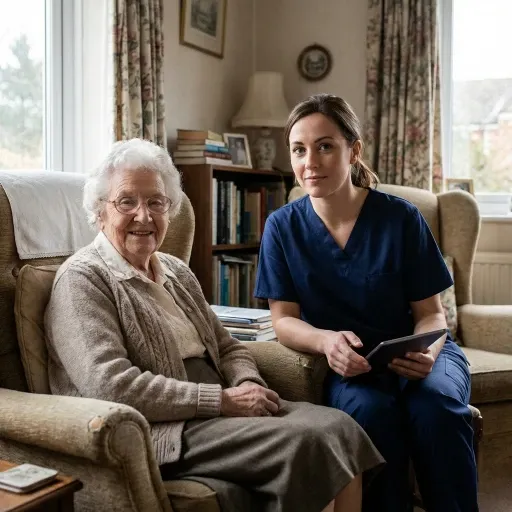
A Nurse-Led Approach Grounded in Clinical Responsibility
British Elderly Care focuses oncomplex care at home through a nurse- led model where clinical accountability is fundamental to care planning and delivery. Complex health and care needs mean that making decisions should be based on professional insight rather than presumption or going through the motions.
Adult nursing supervision acts as a major facilitator in the structuring of care, identification of risks at an early stage, and consistent delivery of support. Besides, it gives a clear dictum to care teams, thus clarifying not only the tasks required to be done but also the rationale behind the use of certain methods.
This mode of operation is thus able to attend to the complex health needs of an individual while simultaneously comforting the family with the knowledge that care is being handled in a very cautious and responsible manner.
Rather than being forced to respond suddenly to changing circumstances, nurse- led care promotes preparation and perpetual evaluation thus making it possible for the care environment to change in a safe manner.
Ethical practice and transparency are the two continuities of British Elderly Care, which are thus providing the backbone of their complex care to be responsible, respectful, and trustworthy.
Person-Centred Care That Starts With the Individual
Complex care works best when it is centred on the person who is getting the support. For a British Elderly Care person, centred care means knowing the person’s life, habits, likes and values, together with their health needs.
This method accepts that complex needs have different effects on different people. Two individuals having identical health conditions may require very different kinds of support depending on their circumstances, environments, and what they value personally.
The way the care is given helps to keep one’s identity and freedom even though health needs are increasing.British Elderly Care brings this person centred philosophy into each and every part ofcomplex care delivery.
Respect, Dignity, and Independence as Core Principles
Respect and dignity are indispensable in complex care, not something one can live without, but the very essence of care. At British Elderly Care, they provide care in such a way that the personal dignity of the individual is preserved and the independence of the person is supported at all times.
The severity of the condition usually means that the care needs of the individual are more dependent; however, this should not be interpreted as the person no longer having control over their life.
The way people are supported in their homes is aimed at helping them to be independent in a safe manner. It is acknowledged that freedom or autonomy is a different concept for various individuals.
Supporting Both Individuals and Their Families
Complex care impacts not only the care recipient but also their family. Relatives are often very close to the situation, emotionally tied, and impacted by changes in care needs.
The British Elderly Cares method considers families as partners in care rather than just people watching. Assistance is given not only to the individuals but also to those who care for and give support to them.
This comprises: Detailed and clear explanations about care arrangements, Regular communication and reassurance, Acknowledgment of family knowledge and involvement, And Provision of guidance when needs or circumstances are changing.
When families are supported together with individuals, complex care becomes more sustainable. Families experience less isolation and more confidence.At British Elderly Care, they provide care in such a way that the personal dignity of the individual is preserved
Clear Communication and Transparent Care Delivery
Clear communication is at the heart of effectivecomplex care. With complex needs, doubt and wrong interpretations can very quickly cause the loss of trust and confidence.
At British Elderly Care, they provide care in such a way that the personal dignity of the individual is preserved and the independence of the person is supported at all times.
This transparency makes families and individuals feel more informed. Besides, it fosters teamwork so that all the people involved know their part in the care delivery.
Using accessible, non-technical language , Keeping families informed of changes, Encouraging questions and discussion,
Trust is deepened through transparent communication and it is also one of the factors helping complex care arrangements to remain stable over time
Adapting Care as Health Needs Evolve
Complicate health needs seldom stay the same. Over a period, people can be subject to several changes that call for new care arrangements
British Elderly Care takes a flexible approach when it comes to complex care. Care plans are evaluated on a regular basis and changed if necessary in accordance with the changing situations, thus the support is kept suitable and adequate.
Such flexibility is a great aid in avoiding changes caused by crises and paving the way for transitional changes to become almost imperceptible.
A change is planned, hencecomplex care is more resistant and capable of responding.
Continuity as a Foundation for Safety and Confidence
When it comes to people with complex health and care needs, consistency in the delivery of care is very crucial.
Knowing the same routine, having familiar faces as caregivers, and getting support from predictable structures are some of the ways that a person’s anxiety can be lowered.
safer delivery of care, better communication, stronger relationships, more confidence among family members. Change can be very disturbing especially if the care requires specialist routines or close supervision.
This way the care is dependable and the individual concerned feels at ease and safe in their home.
A Balanced Approach to Risk and Safety
Being careful to avoid risks is a very important part of complex care. However, this should be combined with the quality of life.
In the care of the Elderly, risk is handled in a very considerate manner, with the main emphasis put on a proper understanding of risk and finding ways to control it rather than getting rid of it totally
This well, balanced way of doing things helps to: Safe care delivery, Continued independence, Meaningful daily routines And Reduced anxiety for families.By addressing risk proactively,
complex care helps individuals remain at home safely without unnecessary restrictions. This approach supports dignity and autonomy alongside safety.This way the care is dependable and the individual concerned feels at ease and safe in their home.
Why Our Approach Matters in Complex Care
How complex care is delivered plays a big role in the outcomes, wellbeing, and confidence of the people involved.
A carefully planned, methodical approach is one of the ways to guarantee that care will always be safe, capable of meeting the needs, and helpful in the long run.
British Elderly Care’s approach to complex care at home is built on : Nurse-led oversight ,Person-centred planning,Respect for dignity and independence,Family involvement,Clear communication.
Together, these principles form the basis of a kind of complex care that is not only reactive and responsible At British Elderly Care, they provide care in such a way that the personal dignity of the individual is preserved
Complex Care Services and Specialist Support We Provide
Delivering Specialist Complex Care at Home
Complex care services are for those whose health and care needs are so advanced that they require more skilled, supervised, and consistently delivered care than what standard home care can provide.
Such services are provided in the home environment to support the safety, continuity, and quality of life of persons with complex and high dependency needs.
Complex care services do not just focus on generic care tasks but are designed to support specific health, led needs that need structured routines, professional understanding, and careful monitoring.
The kind and amount of support given will always be based on the person’s circumstances, how their health needs affect each other, and what is necessary to handle those needs at home in a responsible way.
British Elderly Care offers complex care services through nurse- led supervision and trained care teams, thus specialist support is delivered regularly, safely, and as per individual care plans.
- Tracheostomy Care at Home
- Percutaneous Endoscopic Gastrostomy (PEG)
- Ventilation and Respiratory Support at Home
- Neurological and Spinal Care Support
- Post-Hospital Discharge Complex Care Support
- Managing High-Dependency Care at Home
- Safety, Consistency, and Professional Oversight Across All Services
- Tailoring Specialist Support to Individual Needs
- Delivering Specialist Care Without Losing the Human Focus
- Multidisciplinary Care Teams and Clinical Oversight
- The Role of Therapists and Other Clinical Professionals
- How Multidisciplinary Teams Work Together in Practice
Tracheostomy care is one of the ways to help people with that kind of health condition. Such care necessitates a very cautious approach, adherence, and the involvement of health professionals to be safe and comfortable.
There are some ways that supporting tracheostomy care at home can be done, such as:
- Adhering to the care routines that have been laid down
- Checking for any signs or symptoms of deterioration or danger
- Helping with personal hygiene and correct positioning
- Making sure that the practices are regularly carried out
Because tracheostomy care is associated with elevated levels of dependency, it is essential that care is administered by trained personnel who comprehend the significance of accuracy and observation. It is for this reason that clinical supervision is very important.
The kind and amount of support given will always be based on the person’s circumstances, how their health needs affect each other, and what is necessary to handle those needs at home in a responsible way.
This way the care is dependable and the individual concerned feels at ease and safe in their home.
British Elderly Care is a company that offers tracheostomy support among its complex care services, thus care being well, organized, closely supervised, and adjusted to the needs of the individuals while enabling them to stay in their homes.
Percutaneous Endoscopic Gastrostomy (PEG) feeding support is frequently needed in cases where people are not able to take in enough food through normal eating. The assistance of this nature has to be given cautiously, strictly observing prescribed procedures and adhering to safety precautions.
- Supporting feeding routines as prescribed
- Monitoring tolerance and comfort
- Maintaining hygiene and safety standards
- Observing for changes that may require attention
Food and nutrition are vital to good health and wellbeing of any person, more so, for those with complicated needs. Giving a hand with PEG feeding at home is a great way of both, helping the person stay in a comfortable familiar environment and sticking to the right procedures.
British Elderly Care offers PEG feeding help under a highly regulated complex care model, thus, the nutritional needs of the client are supported in a safe and consistent manner as an integral part of the overall care.
Ventilator dependence and other respiratory, related issues are typical among the people receiving complex care services. Therefore, respiratory support at home requires strict planning, trained assistance, and professional supervision.
Ventilation and respiratory care may involve:
- Supporting established respiratory routines
- Monitoring breathing and comfort
- Observing for signs of respiratory change
- Maintaining a calm and consistent care environment
British Elderly Care provides nursing, led complex care services for people with respiratory and ventilation needs. In this way, we ensure that respiratory support is administered safely and properly supervised even at home.
Neurological and spinal disorders are very frequently located at the root of the most complex care needs. Such disorders may impair one’s ability to move, control movements, communicate, and be independent which would necessitate specialised support that is patiently and consistently provided.
Supporting neurological and spinal needs may involve:
- Assistance with movement and positioning
- Supporting daily routines safely
- Observing changes in ability or comfort
- Maintaining consistent approaches to care
Generally, the needs vary over time and the care teams maintain a certain level of familiarity and structure. Continuity is very essential in the overall support of the well- being and the reduction of the distress of the individuals who are to be cared for.
British Elderly Care is a provider that offers care in the field of neurological and spinal through complex care arrangements that acknowledge the physical as well as the emotional toll of such conditions.
Hospital discharge can mark a significant change in care needs. Individuals may return home with higher levels of dependency or new routines that require careful support.
Post hospital discharge complex care may lead to: Continuing support for new care routines, handling changes in health status, minimizing the risk of hospital readmission, and providing the needed assurance during the transition. People and their families may find it difficult but they get used to their new duties.
Complex care support helps provide stability during this transition. British Elderly Care supports post-hospital discharge through planned complex care services that focus on safety, continuity, and clear communication at home.
High, dependency care refers to the assistance people need when they depend on help most of the time or even continuously to be safe.
This level of care requires a high degree of consistency, understanding, and professional supervision at the very least.
High-dependency complex care may involve:
- Ongoing supervision
- Support with most daily activities
- Close monitoring for changes
- Coordinated care delivery
Giving high, dependency care at home is not just about being there all the time. It’s about having a good plan and being experienced is what matters equally. The care has to be given in a steady and composed manner so that neither the patient nor the whole situation gets panicked.
British Elderly Care ensures high, dependency complex care with trained teams and nurse- led oversight. Therefore, individuals can be provid
Across all complex care services, safety and consistency are essential. Specialist support must be delivered reliably, with clear guidance and oversight to ensure that care remains appropriate.
This comprises:
Adhering to preestablished care plans, Keeping a check on any changes, Sharing observations and Updating care as the needs change.
British Elderly Care makes sure that complex care services of any kind are provided under a well organized system, with the backing of professional supervision and continuous evaluation.
Each person requires different kinds of services. Complex care is adapted to suit the person’s proper needs, preferences, and circumstances.
This involves: Changing the level of support when necessary, Giving importance to habits and decisions, and Altering the care as the medical condition changes.
British Elderly Care provides complex care services with a focus on flexibility, to make sure that the support is effective and not fixed.
Building Trust Through Structure and Transparency :
Building Trust in complex care is not a matter of reassurance only. It is the result of giving structure, showing transparency, and being consistent over time.
It is multidisciplinary care teams and clinical oversight that provide the framework for support of this trust. Families witness the organisation of care, the identification of those involved, and decision making processes.
Giving professional structure and at the same time witnessing compassion in delivery, complex care thus reassures not by words but by deeds.British Elderly Care delivers complex care at home with this balance in mind, ensuring that trust is earned through responsible, coordinated care.
Specialist support undoubtedly necessitates a well, organized, accurate approach, however it should not lose sight of being compassionate and respectful. Care is provided not just focusing on the physical health aspect but also on the comfort, dignity, and emotional well being of the patient.
British Elderly Care’s approach ensures that specialist complex care services remain human-centred, supporting individuals as people rather than focusing solely on tasks.
Complex care services are for those whose health and care needs are so advanced that they require more skilled, supervised, and consistently delivered care than what standard home care can provide.
Complex care services do not just focus on generic care tasks but are designed to support specific health, led needs that need structured routines, professional understanding, and careful monitoring
Specialist Nurses as the Foundation of Complex Care
Specialist nurses are the ones leading the main role in delivering complex care to patients at home. Apart from their clinical expertise and professional accountability, their presence is reassuring to the patients and their families as they know that the care being provided is safe and appropriate.
In cases of complex health and care needs, the presence of a nurse to manage the situation ensures that the intervention is knowledge.
Nurses who handle complex care situations are the ones who have a deep understanding of patients’ health needs, are able to identify risks, and can guide the care teams in following proper procedures.
They are the ones who organise care delivery and ensure that any health deterioration is promptly recognised and dealt with.
Incomplex care, the contribution of a nurse is not only about clinical tasks. It aids decision, making, planning and communication amongst everyone involved in the care. This degree of supervision becomes extremely crucial when the needs are complex, the situation is unpredictable, or the needs are expected to change with time.
Comprehensive health and care needs are quite seldom limited to only one support area. Therapist as well as other clinical professionals input then becomes necessary. Their expert knowledge assists in enhancing daily functioning and wellbeing.
Therapists may contribute to:
- Supporting mobility and movement
- Advising on positioning and equipment
- Helping maintain physical function
- Reducing risk associated with daily activities
Their attendance enhances the quality of care by making sure that it is not only safe but also promoting long, term wellbeing. Therapy input is generally a part of everyday routines rather than being dished out as stand, alone interventions.
In complex care, nurses, therapists, and care teams work closely together to ensure that support is always well coordinated. The different perspectives brought by each professional enable the care to focus on the person’s whole range of needs rather than just one.British Elderly Care collaborates with appropriate clinical professionals to make
Multidisciplinary working is not simply about having different professionals involved. It is about how those professionals work together to support the individual receiving care.In practice, multidisciplinary complex care involves:
- Shared understanding of the individual’s needs
- Clear roles and responsibilities
- Regular communication and updates
- Collaborative decision-making
The information gained by the care teams helps the clinical oversight, and the guidance of the nurses or therapists is changing the way care is implemented day after day.
The teamwork structure at least, is one of the ways in which care can be maintained at an appropriate level even when the needs change.
Besides lowering the possibility of scattered support, where different facets of care are dealt with separately and without any coordination, it also helps to keep the care well integrated.
British Elderly Cares complex care services revolve around this partnership mode of operation, thereby making the support cohesive rather than disjointe
Safety, Clinical Governance and UK Care Standards
A Commitment to Safety and Quality in Complex Care
Safety is the primary consideration when it comes to complex care at home. Those who have multiple health and care needs usually face higher risk situations even when the possible mistakes are minor.
Therefore, complex care should be given in such a way that a well organised structure, quality, accountability, and consistency are the main focus at all levels.
It is not one time requirement that British Elderly Care sees safety. Planning, delivering, and reviewing care with regard to risk, wellbeing, and individual circumstances are aspects of how they continue their care.
The organization combines safety and quality of care in everything from daily living activities to future care planning.
A Commitment to Safety and Quality in Complex Care
A Commitment to Safety and Quality in Complex Care
Safety is the primary consideration when it comes to complex care at home. Those who have multiple health and care needs usually face higher risk situations even when the possible mistakes are minor.
Therefore, complex care should be given in such a way that a well organised structure, quality, accountability, and consistency are the main focus at all levels.
It is not one time requirement that British Elderly Care sees safety. Planning, delivering, and reviewing care with regard to risk, wellbeing, and individual circumstances are aspects of how they continue their care.
The organization combines safety and quality of care in everything from daily living activities to future care planning.

Clinical Governance as a Framework for Safe Care
Clinical governance essentially creates the framework that allows complex care to be both safe and effective. It is about the systems, processes and controls that are in place to make sure that care is up to the right standards and is regularly reviewed.
In complex care, clinical governance works to:
Lead the care planning and decision, making process, Promote professional accountability, Make sure that care is consistent, Measure and improve quality continuously.
Clinical governance, however, is not about strict control. It is about establishing a system, which among other things, helps to facilitate learning, reflection and improvement.
This means that care can change in response to different needs while still being safe and of the highest professional standards.
British Elderly Care incorporates the principles of clinical governance into its complex care services provision, thus the delivery of care is continuously supported by thorough oversight and regular review.
Disclosure and Barring Service (DBS) Checks
Trust is essential when care is delivered in a person’s home. Families need confidence that those providing support have been appropriately checked and vetted.
As part of delivering complex care responsibly, care staff are subject to Disclosure and Barring Service (DBS) checks in line with UK requirements. These checks help ensure that individuals working in care roles are suitable to support vulnerable people.
DBS checks are one element of a wider approach to safety. These are further supported by recruitment process monitoring, together with clear professional expectations.
British Elderly Care acknowledges the significance of safeguarding not just the physical safety but also the trust, and thus, DBS checks are one element of their pledge to the accountable care provision
Aligning With UK Care Standards
Complex care at home has to comply with the UK care standards and the general expectations. It implies that the care taking has to be in line with regulatory requirements, professional guidance and recognised best practices
Trust in complex care is built over time through consistent, responsible practice. Families need to see that care is delivered with attention to safety, quality, and accountability.
British Elderly Care delivers the most complex care meeting theUK framework. We support individuals withcomplex needs in a way that is in line with recognised standards and expectations.
Building Trust Through Safe and Responsible Care
Complex care at home has to comply with the UK care standards and the general expectations. It implies that the care taking has to be in line with regulatory requirements, professional guidance and recognised best practices
By embedding safety, governance, and standards into everyday care delivery, complex care becomes more than a service – it becomes a reliable support system.
British Elderly Care’s approach to safety and governance reflects a commitment to protecting individuals, supporting families, and delivering complex care at home with integrity and professionalism
Training and Experience of Care Teams
Providing complex care means a lot more than doing it well. It demands training, knowledge, and a thorough grasp of methods for safely helping people with high, dependency needs.
Care teams involved in complex care are trained to:
Follow established care plans accurately,
Understand the importance of consistency and observation,
Recognise changes that may indicate increased risk,
Deliver care in line with agreed routines and guidance.
Training should not be seen only as an initial preparation. Regular studies and professional guidance help to ensure that the care teams are always up to the mark and quite sure of themselves as the needs change.
In addition to training, experience is also, of course, a very important factor, especially when working with individuals that have complex or unpredictable needs.
British Elderly Care is committed to ensuring that complex care is delivered by teams who are not only trained but also professionally supervised, thus, allowing safe and dependable care to be continued at home.
Understanding the Costs of Complex Care and How Pricing Works
A Transparent and Fair Approach to Complex Care Pricingg
When care requirements get complicated, issues related to funding are usually raised along with safety and quality concerns. Families indeed want not only to know what support is available but also how pricing works and what will be the situation over time. British Elderly Care follows a clear and fair pricing philosophy for complex care at home. Costs are shaped around individual needs, explained openly, and reviewed as circumstances change.
- Why Complex Care Costs Are Not Fixed
- Factors That Influence the Cost of Complex Care
- Paying Only for the Care That Is Needed
- Clinical Oversight as Ongoing Support, Not Intervention
- Involving Families in Decisions About Care
Unlike normal home care, complex care is of a higher level of responsibility, skill, and oversight. Since needs can vary to a great extent, it is not right to use a single price or standard rate for all cases.
Complex care costs can differ because:
- Health needs vary in intensity and risk
- Levels of dependency are different for each person
- Specialist oversight may be required
- Care may need to adapt frequently
In such a context, publishing fixed prices can be deceiving as they might not show the real level of support that is required. Having a flexible approach means that care can be matched to the need accurately instead of pushing individuals into unsuitable price structures.
British Elderly Care explains pricing in relation to the specific care being provided, helping families understand what is included and why particular costs apply.
Several factors define the cost of intensive home care. Knowing these things will help families to make good decisions and also plan their finances accordingly.
Key considerations often include:
- Complexity of health needs – how layered or unpredictable needs are
- Intensity of support – the level of supervision or assistance required
- Expertise involved – whether specialist or nurse-led oversight is needed
- Duration of care – short-term support or longer-term arrangements
- Consistency requirements – continuity and stability of care teams
These factors interact with one another. For example, an increase in complexity may also increase the level of oversight required. This is the reason cost assessments take place in a comprehensive manner instead of a piecemeal approach.
British Elderly Care takes into account all the factors that might be of concern when talking about pricing so that the care arrangements are suitable and clients clearly understand the costs.
One of the main elements of fair pricing is that families should be charged only for the support they actually need. People with complex needs can change over time and so states of care or care arrangements can be adaptable to this.
This means: Avoiding unnecessary levels of support, Adjusting care when needs increase or reduce And Reviewing arrangements regularly.
Flexible pricing helps ensure that care remains appropriate rather than excessive. It also allows families to adapt plans as circumstances evolve without feeling locked into rigid agreements.
British Elderly Care’s approach allows care to be scaled thoughtfully, supporting individuals and families through change rather than forcing them to fit a fixed model.
Clinical oversight in complex care is often misunderstood as something that only happens when problems arise. In reality, effective oversight is continuous and preventative.
Ongoing clinical oversight helps to:
- Identify early signs of change
- Review whether care plans remain appropriate
- Support care teams with guidance and direction
- Reduce the likelihood of avoidable issues
This forward thinking approach lets the care figure out little by little instead of just reacting to crisis cases. Besides that, it gives comfort to the family that the care is constantly being checked and reviewed by the experts in the field.
At British Elderly Care, clinical oversight is an integral part ofcomplex care delivery, thus, we can ensure
Complex care requires making difficult decisions, to which families are often closely involved. Multidisciplinary teams make it possible for decisions to be well, informed, balanced, and considerate of everyone’s perspective.
Families often trust most when they know a professional is caring for the health of their child with complex needs. Multidisciplinary teams offer a framework that families can depend upon, thus lessening the burden of having to care for them alone.
Complex care is all about providing the right level of input from the family and at the same time ensuring professional support is always there.
Involving families may include:
- Discussing care plans openly
- Explaining the reasoning behind care approaches
- Listening to family concerns and observations
- Adjusting care in response to feedback
This inclusive approach fosters a sense of respect in families and keeps them informed so they do not feel left out. Besides that, it strengthens the care arrangements through the inclusion of the important knowledge of those who are the closest to the individual.
At British Elderly Care, family involvement is considered an essential part of complex care delivery, supporting shared understanding and trust
- Transparency and Clear Communication About Costs
- Understanding Value Beyond Cost Alone
- A Responsible Approach to Pricing in Complex Care
- Continuity and Consistency in Care Delivery
- Clear Roles and Professional Accountability
Clear communication about costs is essential in complex care. Families need to understand what is included and how costs are calculated.
Transparent pricing involves:
- Explaining how care needs influence cost
- Clarifying what support is included
- Discussing how changes may affect pricing
- Avoiding unclear or hidden charges
Transparency is a great way to build trust and decrease stress, especially if the care needs are very tiring. Also, it contributes to a great decision making process by families as they can plan with realistic expectations.
British Elderly Care places the highest importance on having open conversations about prices so that families can feel that they have been well informed rather than being uncertain.
No Hidden Fees or Unexpected Surprises
One of the frequent issues that families bring up is the anxiety of surprise expenses. The pricing for complex care must never be dependent on concealed fees or ambiguous charges.
British Elderly Care has dedication to the avoidance of hidden fees and the provision of clear and honest explanation of pricing.
Cost obviously has a major role, but it is not the only thing that counts in complex care. Value also entails safety, dependability, uninterrupted care, and mental comfort.
Complex care value can be evidenced in the following: Professional care, Consistent care, Lower chances of the care being interrupted, and Care for both the patients and their families.
Concentrating only on the headline cost without factoring in these elements may lead to inappropriate care solutions. A comprehensive understanding of value enables families to make decisions that promote the long term nature and well being of a household.
British Elderly Care urges families to think about how care is provided rather than just how much it costs.
Reviewing Costs as Part of Ongoing Support
Reviewing pricing is an important part of ongoing complex care. As care needs change, it is appropriate to revisit both care arrangements and associated costs.
This ongoing approach helps prevent sudden changes and allows families to feel prepared rather than reactive.British Elderly Care incorporates pricing review into its complex care process, ensuring that costs remain appropriate and clearly communicated.
Complex care pricing should reflect responsibility, transparency, and respect for families. It should support safe care delivery without creating unnecessary financial uncertainty.
- Transparency and clarity
- Flexibility as needs evolve
- Proportionate use of specialist support
- No hidden fees
- Open communication
Your Attractive HeaBy aligning pricing with real needs and explaining it clearly, complex care becomes easier to understand and manage.ding
Continuity matters to a great extent for people with complex health and care needs. Knowing one’s habits, likes and ways of communication can alleviate the stress and help keep one healthy.
Consistency in care delivery means:
- Care teams understand individual needs deeply
- Routines are followed reliably
- Changes are recognised quickly
- Trust is built over time
If someone has to change caregivers frequently or if the same situation is handled in different ways, it can be very confusing, especially when the level of dependence is very high. Complex care tries to reduce changes by keeping the same people doing the care as much as possible.
Care for the elderly in Britain is a concept that mainly focuses on continuity, thus being aware of the fact that it means a lot to not only care recipients but their families as well.
Clear definition of roles is imperative in complex care. All parties need to have mutual understanding of their duties and how their roles contribute to the overall care plan.
Clear role definition helps:
- Prevent misunderstandings
- Support safe care delivery
- Ensure accountability
- Improve communication
Professional accountability is particularly important when care involves complex routines or higher levels of risk. Oversight structures ensure that care decisions are guided by appropriate expertise.British Elderly Care’s approach to complex care emphasise
NHS Continuing Healthcare (CHC) and Funding Pathways
Understanding NHS Continuing Healthcare in the UK
NHS Continuing Healthcare, commonly known as CHC, denotes a continuum of care that the NHS arranges and finances for those with constantly evolving health needs.
It is targeted at those individuals whose main requirement for care is due to their health and not merely social or personal care.
CHC support can extend to various types of care environments, including the person’s own home if suitable. It is not a means tested benefit, which means the criterion for qualification is the health needs identified through the assessment rather than the person’s income or savings.
Nonetheless, havingcomplex health needs does not automatically make one eligible, and the procedure of assessment might seem hard to comprehend.
CHC is a component of the larger framework of the National Health Service and is meant to assist individuals whose care needs are long, term, complicated, and considerable.
British Elderly Care collaborates with appropriate clinical professionals to make sure that complex care is well, informed, balanced, and responsive.
Grasping the essence of CHC, and what it isn’t, can equip families to deal with the process with a more realistic perspective.

- Long-term or progressive health conditions
- Multiple, overlapping health needs
- Significant levels of dependency
- Ongoing need for specialist oversight
Understanding that payment for CHC is not just based on the diagnosis is key. Two persons having the same condition may have vastly different levels of needs, and the eligibility depends on how these needs affect their daily life.
British Elderly Care, among other services, helps families who might be in the process of a CHC assessment or thinking about complex care options to generally understand the procedure.
- A review of health and care needs
- Consideration of how needs are managed day to day
- Input from relevant professionals
- Use of national assessment frameworks
Family members who are often confused and have difficulties understanding the distinction
Health needs and social care needs can be eased by the fact that the assessment is really about whether a person’s main care needs from the point of view of the health care rather than social care needs.
- CHC eligibility is not met
- Families prefer greater flexibility or control
- Care needs fall outside NHS funding criteria
It is still possible for private complex care arrangements to be nurse- led, well structured and meet the highest safety and governance standards.
Opting for private funding does not take away the significance of professional supervision and quality care provision.
British Elderly Care offers complex care services which are available through private arrangements. They believe that care should be thoroughly planned and effectively delivered irrespective of the source of funding.
- Transitioning from private care to NHS-funded support
- Changes in eligibility following reassessment
- Adjustments to care intensity over time
Knowing that funding routes can change gives families the opportunity to plan in a more flexible way. It also makes regular reviewing and open communication.
British Elderly Care guides individuals and families by clarifying how funding avenues might be altered.
what this could imply for care arrangements, while not providing financial or legal advice.
- Explaining how CHC assessments generally work.
- Helping families prepare questions
- Clarifying how care arrangements fit within funding pathways
- Supporting communication where appropriate
This guidance is intended to reduce confusion rather than influence outcomes. It is the families’ responsibility to deal with theNHS or local authority teams directly for funding decisions
The role of British Elderly Care is to help in making things clear, not to be a substitute for formal assessment processes..
British Elderly Care guides individuals and families by clarifying how funding avenues might be altered.
- Understanding potential changes in funding
- Reviewing care arrangements regularly
- Remaining flexible as needs evolve
- Use of national assessment frameworks
British Elderly Care is committed to delivering complex care with safety and professionalism at the forefront in both the scenarios of care being funded by theNHS and the case of privately arranged care.
This guarantees the uniformity and dependability of the care regardless of different funding routes.
Funding as One Part of the Wider Care Picture : Although financing is an important aspect, it is only one element in a comprehensive care plan. Safety, quality, continuity, and appropriateness of care are the main issues that have to be and will be addressed whatever the source of funding.
Supporting Families and Caregivers Along the Journey
Helping Families Understand What Complex Care Really Involves
Families are frequently exposed to unfamiliar language, routines, and expectations when care needs become challenging. Feeling prepared and confident requires an understanding of what complex care entails and how it fits into daily life.
British Elderly Care supports families by explaining complex care in clear, accessible terms.This entails assisting families in comprehending how various needs are met, how care is organized, and the function of expert supervision.
Families may already be handling a lot, so information is shared thoughtfully and gradually.
Understanding complex care is not about learning medical details. It is about understanding how care is actually provided, and who is responsible for what. This clarity helps families feel relieved and more able to engage with care arrangements.
- Guidance and Familiarisation With Equipment and Routines
- Emotional Reassurance Through Clear and Honest Communication
- Being a Consistent Point of Support Over Time
- A Partnership Approach to Care
- Helping Families Navigate Change and Uncertainty
- Encouraging Families to Care for Themselves
- Why Family Support Is Central to Quality Complex Care
Special routines or equipment in the home can be one of the most intimidating aspects of complex care for a lot of families. Understanding the situation helps families calm down and feel more secure even if they do not take care of the patient directly.
Support may include:
- Explaining the purpose of equipment in simple terms
- Walking through routines and safety considerations
- Clarifying what families need – and do not need – to manage
- Providing reassurance around professional oversight
This guidance is not about turning families into care professionals. It is about helping them feel informed and comfortable in their own home environment.
British Elderly Care recognises that familiarity reduces fear. By supporting understanding at an appropriate level, families are better able to feel at ease alongside complex care arrangemen
Taking care of a family member with several health issues is an emotionally taxing situation. To be honest, even the families of patients under professional care may have concerns.
Firstly, constant and sincere communication can obviously support a person emotionally by providing them with an assurance of the presence of loved ones. It makes less room for guessing and therefore worry, if you understand what is going on, why decisions have been made and how the care is being evaluated.
British Elderly Care considers the following aspects of communication as a priority: calm and respectful, clear and without jargon, truthful about what is known and unknown and answering to the questions and needs of the people.
Such a communication process helps families to be informed rather than having to guess. Emotional reassurance does not result from the frequent giving of information but from the realization that communication is transparent and can be trusted at the moment of need.
Complex care is not usually a short term requirement. Families’ needs for support and information will most probably change over time.
British Elderly Care understands that it is of great importance to be a stable factor in the lives of elderly throughout the whole process.
British Elderly Care recognises the importance of being a consistent presence throughout this journey. This includes:
- Being available to answer questions as they arise
- Providing continuity in communication
- Supporting families through changes in care needs
- Offering guidance during transitions
Being consistent contributes to the establishment of trust. Families have their contacts and know what to expect, thus, the uncertainty and emotional stress are lessened.
Such continuous help is especially valuable at those times of change when one may feel overloaded with the new ways of doing things or decisions.
Complex care is most effective when it is done together with families. Families have a lot of knowledge about the routines, preferences, and what matters most to the person who is being cared for.
A partnership approach involves:
- Listening to family insights
- Sharing information openly
- Respecting family roles and boundaries
- Working together to support wellbeing
This cooperation keeps care arrangements strong and makes it possible to have better results for everyone. Families do not feel sidelined but rather respected, and care continues to be in line with the individual’s life and values.
British Elderly Care sees families as partners in care and acknowledges their contribution whilst still making it clear that professionals have the responsibilit
Change is a constant feature of complex care. Health needs may evolve, routines may adjust, and care arrangements may need to be reviewed.
Supporting families through change encompasses:
- Clarifying the rationale for adjustments
- Offering comfort to families during transitions
- Guiding families to recognize what stays the same
- Giving families the opportunity to ask questions and share their worries
- Change, or uncertainty, related situations can cause stress and anxiety.
However, the combination of clear communication and organized support can make families feel more prepared. A sense of stability is maintained when families are aware that care can be modified without a sudden interrupti
Most families who support members with complex needs finally neglect their own wellbeing as the most important thing. If this happens for a long time, one’s physical health, emotional strength, and relationships may be affected.
British Elderly Care endeavors to reassure families that their own wellbeing matters just as much.
Understanding one’s own limits, being open to getting help and having a break without feeling guiltyIt is only through families being helped to look after themselves that the care of complex members can be continued over a long period in a healthier and more satisfying way.
This way of thinking certainly makes families less prone to burnout and they become stronger over time.
Respecting Cultural, Emotional, and Personal Differences Families hug a variety of cultures and that is reflected in their belief systems, values and expectations in relation to care. When a family is being supported that really means their differences are being recognised and respected.
British Elderly Care views the support of families through the lens of cultural awareness and seeks to ensure that the communication and care arrangements are reflective of the individual circumstances.
Such a respectful approach fosters trust and therefore, the support is experienced as comfortable and suitable.
Supporting families is not an additional feature of complex care – it is central to its success. When families feel informed, reassured, and supported, care arrangements are stronger and more sustainable.
British Elderly Care understands the integration of family support into complex care delivery by:
- Putting communication first
- Sharing the burden
- Giving advice without insisting
- Establishing long, term relationships
Such an approach acknowledges that complex care deeply impacts familie
Transitions, Hospital Discharge and Short-Notice Complex Care
When Care Needs Change Suddenly
Not all transitions into complex care are well planned ahead of time.Often, people and families find their care needs altering drastically after a sickness, accident, or hospitalization. Things that one thought were manageable before might, after the health deterioration, no longer be safe or feasible.
It’s quite common to feel all sorts of emotions during these periods. For instance, families nearing the end phase, on one hand, may be very happy with the idea of returning to their homes but, on the other hand, they may be filled with anxiety that they won’t get the right care and support.
When going through changes like these, the first thing that one should do is to get the priorities right, identify what is urgently necessary, what can wait for a later time, and how to get the home care safely delivered.
Complex care is one of the key elements that can support these changes by providing well organized assistance that caters to the present needs and at the same time, makes it possible to reassess and modify the situation as it stabilizes

Planning Care After Hospital Discharge
Hospital discharge is a common point at which complex care is introduced. Individuals may leave hospital with new routines, increased dependency, or health needs that require closer monitoring than before.
Effective discharge planning focuses on:
- Understanding current health needs
- Identifying new or increased risks
- Ensuring care routines are clear
- Supporting continuity between hospital and home
Coming back to one’s own place can be a good thing, but only if the proper support is available. Lack of continuity of care during such a transition can heighten one’s anxiety and the potential danger especially if the needs are complicated.
British Elderly Care collaborates with appropriate clinical professionals to make sure that complex care is well, informed, balanced, and responsive.
British Elderly Care aids those who are coming back home after being hospitalized by engaging with the families and, if necessary, with the health professionals in order to obtain the discharge information and arrange the care that is in line with the current needs.
Complex care is one of the key elements that can support these changes by providing well organized assistance that caters to the present needs and at the same time,
Supporting Safe and Structured Transitions Home
A safe transition home involves more than arranging care hours. It requires careful consideration of how health needs will be managed in a non-clinical environment.
This may include:
1)Reviewing the home environment
2)Planning support around daily routines
3)Ensuring care teams understand current needs
4)Establishing clear lines of communication
The goal is to produce a feeling of stability when there is a lot going on and it can be hard to handle changes. Introducing care should be done in a way that is comforting and not disturbing, giving people time to get used to being home again.
British Elderly Care focuses on the safety, continuity, and reassurance aspects when dealing with transitions and thus helps to ensure that care arrangements are suitable eliminating the need to change them later.
Coordinating With Healthcare Professionals
Transitions often involve multiple professionals, particularly during hospital discharge or changes in health status.Coordination helps ensure that care at home aligns with current clinical understanding and guidance.
This coordination may involve:
1)Reviewing discharge information, 2)Clarifying care routines, 3)Sharing relevant observations And Supporting continuity of care.
Effective communication helps to make sure that care arrangements are well informed and consistent.
British Elderly Care collaborates with families and, when necessary, with healthcare professionals within the framework of the National Health Service,
thus ensuring that the provision of care is aligned with the present needs and guidance without trespassing the limits of professional competencies.
Maintaining Flexibility After Discharge or Change
Care needs immediately after discharge or a sudden change may not remain the same. As recovery progresses or health stabilises, care requirements may reduce, increase, or change in nature.
Flexible complex care allows for:
1)Adjustment of support levels
2)Review of routines and risks
3)Ongoing assessment of needs
This flexibility is important in avoiding unnecessary care while ensuring safety is maintained. It also helps families feel confident that care will evolve appropriately rather than remaining fixed.
British Elderly Care incorporates regular review into post-discharge and short-notice care arrangements, ensuring that support remains aligned with current needs.
Avoiding Gaps in Care During Critical Moments
One of the biggest risks with transitions is that the patient can easily become a victim of forgotten care. When there is a change of assistance suddenly, confusion may rise concerning duties, particularly if various services are involved.
Complex care helps reduce this risk by providing:
1)Clear care arrangements
2)Defined responsibilities
3)Consistent communication
Transitions will be easier and safer if the delivery of care is well structured and the patients understand it.
British Elderly Care understands how critical it is for the elderly to have continuity during these important moments and tries to create as little inconvenience as possible.
Supporting Families to Adjust to New Care Realities
Transitions affect families as much as individuals. New routines, increased support, or sudden changes can take time to process.British Elderly Care collaborates with families and, when necessary,
Supporting families during transitions includes:
1)Acknowledging emotional impact
2)Providing space to ask questions
3)Allowing time for adjustment
Care arrangements should support families to regain confidence gradually rather than expecting immediate certainty.British Elderly Care approaches transitions with sensitivity, recognising that adjustme
A Calm and Structured Response to Urgent Situations
Urgency in complex care does not require alarm. It requires calm, structured action guided by professional understanding.
Complex care is a framework that supports safety in situations such as hospital discharge or a sudden change in condition. It does so without creating unnecessary pressure.
British Elderly Care offers complex care during transitions with an emphasis on clarity, coordination, and flexibility, thus enabling individuals and families to progress confidently.British Elderly Care delivers complex care within this defined scope,
Clear Boundaries, Ethics and What Complex Care Does Not Cover
Why Clear Boundaries Matter in Complex Care
Complex care at home is a stretch goal for the caregivers and the families who depend on that care. It is necessary to know them to ensure that care is safe, proper, and delivered properly.
The families may believe that complex care covers the totality of their medical or emergency needs, which may put the individuals’ lives in danger. Clarifying what complex care can and cannot do is a way of gaining people’s confidence and facilitating wiser choices.
British Elderly Care thinks that it is a fundamental element of good care to be clear in communication. By telling the boundaries honestly, a complex care that is both safe and suitable can be contributing to the family’s and the individual’s understanding of when and how to access the right services.

The Scope of Complex Care Services
Complex care at home is basically a service to help people who have very dependent health and care needs over a long time live in a non clinical setting.
It means following structured routines, having specialist oversight, and care teams trained and working according to care plans made by the person.
The scope of complex care typically includes:
1)Health-led support delivered at home,
2)Specialist routines carried out by trained teams,
3)Ongoing observations and professional oversight,
4)Support aligned with assessed needs
Complex care is not a substitute for hospital care, emergency services, or specialist medical treatment. It is part of the healthcare system to assist people in their homes when it is safe and suitable to do so.
British Elderly Care delivers complex care within this defined scope, ensuring that care remains focused, responsible, and aligned with professional standards.
When Other Services May Be More Appropriate
Complex care is not always the most suitable option. There are times when other services may better meet an individual’s needs, either temporarily or longer term.
Other services may be more appropriate when:
1)Needs require continuous medical intervention,
2)Hospital-based treatment is necessary,
3)Short-term rehabilitation is required
4)Care needs fall outside the scope of home-based support
Recognising this is part of ethical care delivery. Continuing complex care when it is no longer suitable can increase risk and compromise safety.
Complex care at home is a stretch goal for the caregivers and the families who depend on that care. It is necessary to know them to ensure that care is safe, proper, and delivered properly.
British Elderly Care takes an honest approach to these situations, supporting families to consider alternative or additional services where appropriate, rather than continuing care that no longer meets the individual’s needs.
Ethical Responsibility in Care Decisions
Ethical responsibility forms the core of complex care. Advocating for an individual’s safety and appropriateness of the care shall be the main guiding principle for all such decisions rather than convenience or external expectations.
Ethical complex care basically means:
Being honest about one’s limits, not making unrealistic promises, putting safety and well being first, and acting in the person’s best interests.It is also about recognizing that when care needs change in a way that requires reassessment or different forms of support, one must take appropriate action.
British Elderly Care uses such an ethical framework to think about complex care decisions and thereby, is able to ensure that the care recommendations continue to be based on both responsibility and professional judgement.
Clear communication with families,
Honest discussion about changing needs
Transparency as a Measure of Trust
Clearly stating the limitations is not weakness in giving care, it is a demonstration of honesty. Openness enables families to make decisions based on facts and lessens the possibility of them making unsafe assumptions.
Trust in complex care does not depend solely on the provision of a care provider but also on its readiness to admit that there are certain things it cannot provide
Complex care at home is a stretch goal for the caregivers and the families who depend on that care.
Complex care at home is a stretch goal for the caregivers and the families who depend on that care. It is necessary to know them to ensure that care is safe, proper, and delivered properly.one must take appropriate action.
British Elderly Care finds transparency a vital element of ethical care, which in turn means that people and families are supported truthfully throughout their care journey,Clear communication with families.
Supporting Safe Transitions When Needs Exceed Scope
When an individual’s needs exceed what can be supported safely at home, complex care must adapt.
This may involve supporting a transition to other services or care settings.
Supporting safe transitions includes:
Clear communication with families,
Honest discussion about changing needs,
Coordination where appropriate
Complex care at home is a stretch goal for the caregivers and the families who depend on that care.
Such changes can have an emotional impact and it is one of the ways to ensure that people receive the proper help continually, talking about them frankly.
British Elderly Care offers help to families feeling like this with compassion and honesty, knowing that keeping both Clear communication with families.
Speak to Us About Complex Care – Guidance Without Obligation
When You’re Unsure What the Right Step Is, Start With a Conversation
Deciding to contact complex care services is hardly ever a simple decision. Quite a few families who come to this point are feeling lost, exhausted, or not even sure whether they are asking the correct questions.
Some are reacting to a recent deterioration in health. Others are realizing that the present help is not enough. If you believe that this is the case with you, keep in mind that there are others similarly affected
British Elderly Care’s experience is that most of the time, when people go into intensive care, it is mainly about comprehending what is happening, what is necessary, and what options are available rather than selecting a particular service.

A Safe Space to Ask the Questions You Haven’t Asked Yet
Families frequently confide in us that they postponed contacting us because they were afraid of asking the wrong questions, or that they should have the answers themselves. We have no wrong questions here.
You might be wondering:
- Whether care needs are truly “complex enough”
- If home is still the right place
- How support could fit around daily life
- What changes might be ahead
Questions like these are considered to be just a normal part of trying to work out a complicated care situation. Being honest about it helps to dispel the feeling of being lost and can provide you with a sense of trust, even if you don’t come to any decisions.
British Elderly Care is a place that offers you a safe platform for a frank and heartfelt discussion without any fear of being judged, pressured, or having to meet any expectations.
Understanding Complex Care in Your Real-Life Context
Complex care does not exist in theory. It exists in homes, families, routines, and real lives. Any meaningful conversation about care must reflect that reality.
When you speak to us, we focus on how complex care might work in your specific circumstances – not in general terms. This includes thinking about:
- Daily routines and preferences
- The home environment
- Family involvement and boundaries
- How needs may change over time
Sometimes this leads to confirming that complex care is the right next step. Sometimes it leads to reassurance that current arrangements are still appropriate. Both outcomes are valid.
Why Families Choose to Speak With British Elderly Care
Families contact British Elderly Care not because they want a sales conversation, but because they want clarity, honesty, and professional perspective.
They value:
- Calm, straightforward communication
- Nurse-led understanding of complex needs
- Transparency about what care can and cannot do
- Respect for family roles and emotions
We base our work on responsibility and realism. It is more important to us to assist you in seeing the truth of your situation than to push you for a decision that would not be comfortable for you.
Taking the First Step Does Not Mean Taking All the Steps
One of the biggest concerns families express is fear of taking care of their loved ones. Reaching out does not set anything in motion unless you choose to take it further.
There is no pressure to:
- Start care immediately
- Commit to a plan
- Make decisions before you are ready
Instead, the aim is to help you feel more informed, supported, and confident – whatever you decide next.
When You’re Ready, We’re Here to Talk
Complex care is not just about services. It is about people, families, and the need for care. Having a conversation can make those moments feel more manageable.
Speak to British Elderly Care About Complex Care
If you would like to:
- Talk through your situation
- Ask questions without obligation
- Understand whether complex care may be appropriate
We are here to listen.
Speak to British Elderly Care about complex care – for guidance, not pressure.
Frequently Asked Questions About Complex Care
2.How is complex care different from standard home care?
Complex care is associated with greater dependency through specialist routines and clinical oversight that are beyond personal care at home.
3.What does complex needs mean in this context?
Complex needs are a combination or a presence of health, physical, neurological, or long, term conditions that require a coordinated support response.
4. Who is complex care for?
Those whose health requirements are severe, not easy to predict, or that cannot be safely managed at home through regular care.
5. Is complex care just for elderly people?
Definitely not. Complex care can be for adults of various ages who have long, term or high, dependency health needs.
6. Can complex care be provided across the UK?
Yes. Complex care at home can be delivered across the UK, subject to assessment and planning.
7. Who delivers complex care at British Elderly Care?
Care is delivered by trained teams with nurse-led clinical oversight.
8. Does complex care replace hospital or GP care?
No. Complex care supports people at home but works alongside NHS and medical services.
9. Is complex care medically led?
Complex care is health, led with clinical oversight but does not replace doctors or hospitals.
10. What kinds of conditions are supported?
Complex care is a support system for neurological, respiratory, spinal, progressive, and multiple long, term conditions.
11. How does complex care support independence?
By managing risk responsibly while respecting routines, preferences, and personal autonomy.
12. Are nurses involved in complex care?
Yes. Nurse-led oversight is central to safe and coordinated care delivery.
13. Are families involved in care decisions?
Yes. Families are involved through clear communication and shared understanding.
14. How is care personalised?
Care is planned around individual needs, routines, and circumstances rather than diagnoses alone.
15. What happens during the first conversation about care?
The focus is on understanding needs and challenges, not selling or fixed packages.
16. How are complex care needs assessed?
Complex care needs are assessed through a comprehensive evaluation which considers the patient’s health, potential risks, their daily habits, and the living environment.
17. Is a care plan created?
Yes, A personalized care plan is developed that acts like a guide to delivering the care and is revisited and updated, if necessary, on a regular basis.
18. Can care plans change over time?
Indeed, a care plan is a living document that gets updated according to the changes in the patient’s health status and other circumstances.
19. How is safety managed at home?
Safety management at home is done by implementing several steps together thus, a thorough risk assessment, professional supervision, staff training, and regular monitoring.
20. Are care teams trained for complex needs?
Certainly. Care personnel are given training that matches the complexity of the situation they are dealing with.
21. Are DBS checks carried out on care staff?
Yes. Care staff are DBS checked in accordance with UK regulations.
22. How is safeguarding handled?
Safeguarding covers areas such as maintaining dignity, identifying risks, and implementing the correct procedures for reporting.
23. What is clinical governance in complex care?
It is the system by which the safety, accountability, and regular review of care provision are ensured.
24. How is risk managed in a home setting?
Risks are first identified and then suitably handled so that safety, as well as independence and quality of life, are kept in balance.
25. What happens if an incident occurs?
Incidents are documented and analyzed and the outcome is used to make safety and care of better quality.
26. How is personal data protected?
Data is handled as a matter of confidentiality and in compliance with UK data protection laws.
27. Does complex care include emergency response?
No. If there is an emergency, the emergency services should be called for a life threatening situation.
28. When might complex care not be suitable?
When needs require continuous medical intervention or hospital-based treatment.
29. Can complex care be short-term?
Yes. Complex care may be short-term or long-term depending on needs.
30. How does complex care support hospital discharge?
It supports safe transitions home and helps manage new or increased care needs.
31. What is short-notice complex care?
Support is arranged quickly when care needs increase or change unexpectedly.
32. How is care coordinated with healthcare professionals?
Through communication and coordination, without replacing NHS decision-making.
33. Does complex care help reduce hospital readmission?
It supports stability at home, though outcomes vary by individual.
34. How are families helped emotionally?
Through clear communication, with assurance of care and shared responsibility.
35. Are families expected to deliver specialist care?
No. Families are supported to understand care, not deliver complex routines.
36. How does complex care reduce caregiver stress?
By sharing responsibility and providing professional oversight.
37. Can families be involved if they want?
Yes. Families are allowed to be involved as much as the person being cared for till the end.
38. In what way does complex care facilitate long term planning?
By conducting reviews regularly and allowing care arrangements to be flexible.
39. Define NHS Continuing Healthcare (CHC)?
CHC is a package of care funded by the NHS for those people whose main care needs are of a healthy nature.
40. Is CHC a means tested?
No. The criteria for being eligible are the health needs, not the financial status.
41. Is CHC available to all who have complex needs?
No. Whether a person is eligible depends on the level of need determined through assessment, not the diagnosis.
42. Who makes the decision about CHC eligibility?
It is the assessment teams of the NHS who decide on an individual’s eligibility not the care providers.
43. Is it possible to have complex care funded through private means?
Yes, it is possible to privately arrange complex care if this is deemed appropriate.
44. Is it possible that the way the funding is arranged can be different at different times?
Yes. As needs are re-evaluated, the funding may be varied.
45. Will British Elderly Care guarantee you NHS funding?
No. It is the NHS who makes the funding decisions.
46. How does British Elderly Care support funding understanding?
By explaining processes clearly, without providing financial or legal advice.
47. How does complex care pricing work?
Pricing reflects individual needs, complexity, and level of support required.
48. Why are there no fixed prices?
Because complex care needs vary and fixed prices can be misleading.
49. Are there hidden fees?
No. Pricing is explained transparently.
50. Can care costs change?
Yes. Costs may change if care needs increase or reduce.
51. What ethical principles guide complex care?
Honesty, safety, dignity, transparency, are what is needed in the individual’s best interests.
52. Can complex care ever be stopped?
Yes. If needs exceed scope, other services may be more appropriate.
53. How are transitions handled when needs change?
Through structured planning, communication, and review.
54. Does complex care support quality of life?
Yes. Wellbeing, comfort, and dignity are central to care delivery.
55. How is continuity of care balanced?
Through consistent care teams and clear communication.
56. Are families informed when care changes?
Yes. Changes are discussed openly and clearly.
57. Is complex care culturally sensitive?
Yes. Care respects cultural, personal, and family preferences.
58. Is complex care regulated in the UK?
Yes. Care operates within UK regulatory and governance frameworks.
59. How do families know complex care is right for them?
By understanding needs, risks, and options through informed discussion.
60. What is the first step to exploring complex care?
The first step is an open conversation to understand needs and possible support.